Lynnfield, MA · Serving Greater Boston and New England 617-990-2567
Pro Hardwood Floors

Stairs and repairs

The stairs are the part of the floor everyone touches.

Treads, risers and nosings that match the floor they land on. Refinished in place when the wood is there, rebuilt when it is not. Plus the repairs that keep an old floor from becoming a new one: water damage, pet stains, gaps, squeaks and board replacement.
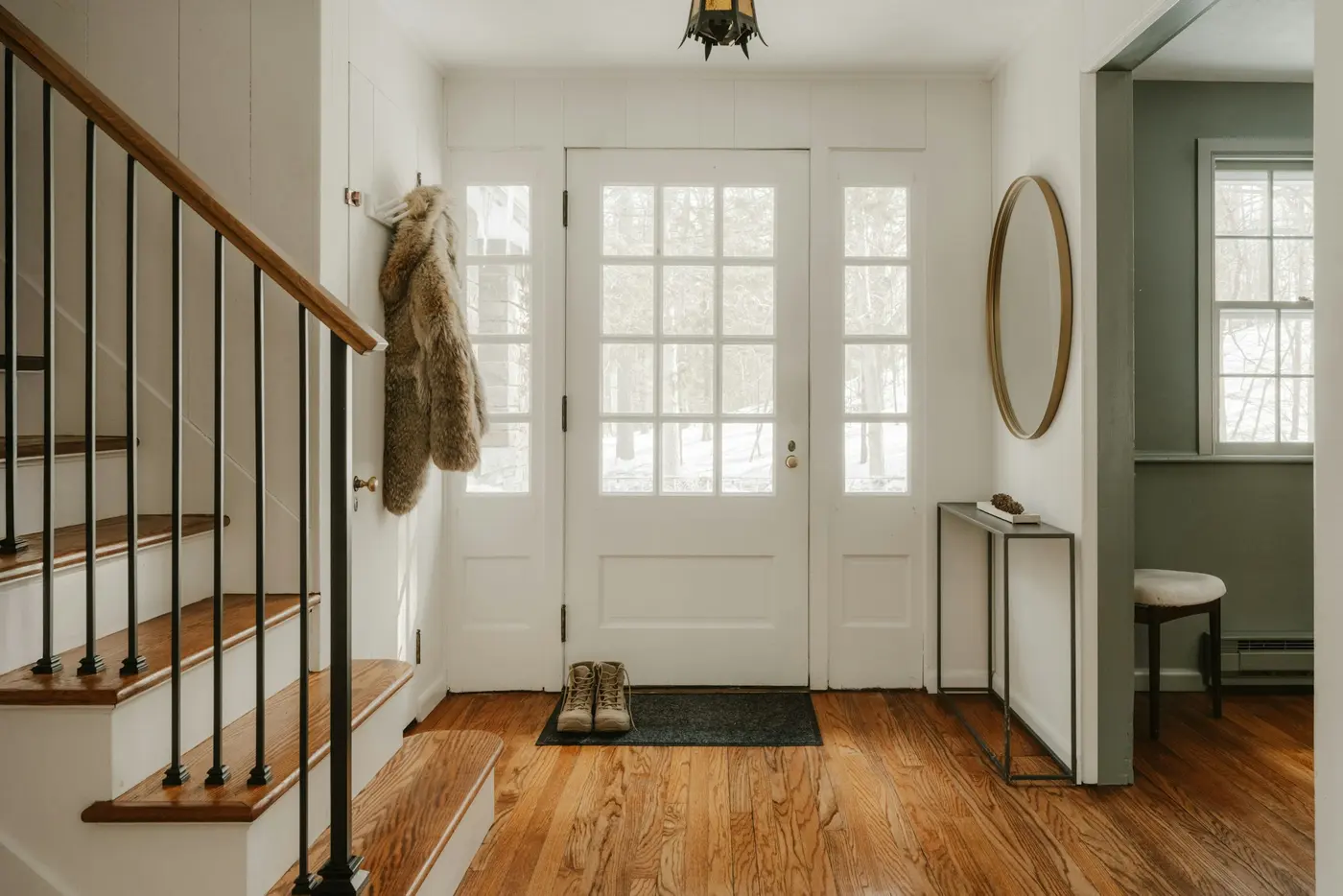
Front entry with a refinished oak floor and matching oak staircase with white risers

Stairs

Three ways a staircase gets done

Which one depends on what is under the carpet, and we do not know until it comes up. We quote a range and confirm on the day.

Refinish in place
Real oak or pine treads under the carpet: pull staples, fill the holes, sand each tread and riser by hand and with an edger, stain to match the floor, three coats. Risers usually painted white or the trim color. The most common outcome in pre-1960 houses.
Retread
Construction-grade treads not worth finishing: a new 1-inch oak tread with a matching nosing is fitted over or in place of the old one, with a new riser face. Finished on site so it matches the floor. Faster than a rebuild and what most 1980s-and-later houses need.
Rebuild
Rotten, split or badly cut stringers and treads: new treads and risers cut and fitted to each step, since no two are the same in an old house. Skirt boards and nosings to match. Finished with the floor.
Landings and nosings
Landings are laid as floor with a proper nosing, not a piece of trim. Stair nosings are milled from the same species as the tread so the edge grain matches. Bullnose or square edge, your call.

Repairs

Fix the boards, then make the fix disappear.

Anyone can swap a board. The work is in making the new wood match the old, and that usually means sanding and finishing the area as one floor.

Water damage
Dishwasher leaks, ice-maker lines, a bathtub overflow. Cupped boards sometimes flatten on their own once dry (give it weeks, not days); black or delaminated boards get cut out and replaced. We check the subfloor for the same damage before closing it up.
Pet stains
Surface stains sand out. Urine that has soaked in and turned the wood black does not; those boards are replaced and laced into the surrounding floor, then the room is sanded and finished together so there is no patch to see.
Board replacement
Matched species and width, cut out with a plunge saw and laced in with staggered joints rather than a square patch. Old-growth red oak from a 1920s house is tighter-grained than new stock; we source reclaimed boards when a match matters.
Gaps
Seasonal gaps that close in summer are normal in solid wood and should be left alone. Gaps that stay open year-round get filled with matching wood slivers or a flexible filler, depending on width, before finishing.
Squeaks
Shimmed and screwed from below where the basement ceiling is open. From above, trim-head screws at an angle into the joist, filled and touched up. We fix most; we will not promise every squeak in a 120-year-old floor.
Transitions and vents
Flush-mount wood floor registers, thresholds and reducers in the same species and finish as the floor, replacing the metal grates and aluminum strips that came with the house.

Questions

What people ask about stairs and repairs

What is under my carpeted stairs?

In most Boston-area homes built before 1960, real oak or pine treads, usually with hundreds of staple holes and a paint line at the edges. Those can be sanded and refinished in place. In newer construction, it is often construction-grade pine or plywood meant to be covered, and the treads get replaced with new oak or a retread cap.

Can a damaged board be replaced without redoing the whole floor?

The board can be replaced. Making it invisible is the hard part: a new board finished separately never matches the color and sheen of a floor that has aged. For a true match the repaired area and the surrounding floor are sanded and finished together, usually the whole room. We will tell you which option you are looking at.

Can you fix squeaks?

Usually. Squeaks are movement, either the floor against the subfloor or the subfloor against the joists. From below, if there is a basement ceiling open, we shim and screw. From above, we use trim-head screws driven at an angle through the board into the joist, filled and finished. Not every squeak in a 120-year-old house can be silenced, and we will say so.

Free in-home estimate

Tell us about your floors.

Mike comes out, walks the floors with you, measures, and you get a written quote within two business days. No pressure, no sales call.